 EN
EN
Shengan Building A, Hengzeng Road Chang'an Town Dongguan City,
Guangdong, China, Zip Code: 523880

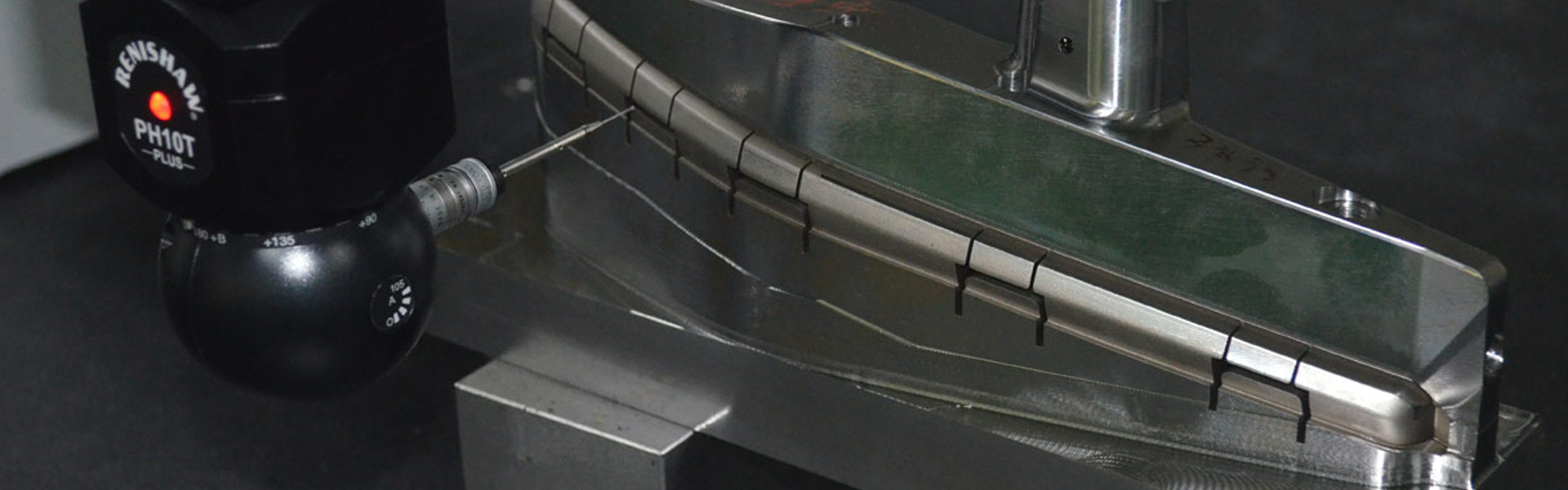
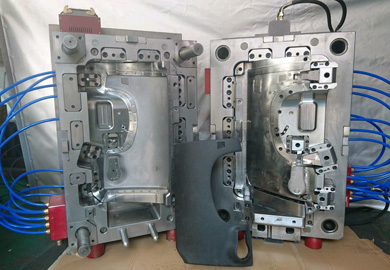
A house hold appliance mould is designed for high-volume production of visually critical, consumer-facing plastic parts such as washing machine housings or air conditioner panels. It emphasizes surface finish, dimensional consistency, and long mold life.
An industrial mould, by contrast, is engineered for functional durability, structural strength, and complex geometries, often used in machinery, automotive, or heavy-duty applications where appearance is secondary to performance.
The differences extend across design standards, materials, tolerances, production cycles, and cost structure—all of which directly impact your project’s success.
A house hold appliance mould is used to manufacture plastic components for consumer appliances such as:
Washing machines (outer shells, control panels)
Refrigerators (liners, drawers, door bins)
Air conditioners (covers, vents, housings)
Small appliances (kettle housings, vacuum cleaner parts)
High aesthetic requirements (gloss, texture, color consistency)
Tight dimensional tolerances for assembly fit
High-volume production cycles (hundreds of thousands to millions of shots)
Multi-cavity mold designs to improve productivity
Frequent use of polished or textured mold surfaces
In practice, these molds must balance appearance + efficiency + durability, making them highly refined in both design and processing.
Industrial moulds are used for manufacturing functional plastic components across industries such as:
Automotive (structural parts, brackets)
Machinery (gear housings, enclosures)
Electronics (connectors, industrial casings)
Construction (pipe fittings, heavy-duty parts)
Focus on strength and durability over appearance
Use of engineering plastics (PA, PBT, PPS, reinforced materials)
Complex internal structures (ribs, bosses, inserts)
Lower production volumes but higher part complexity
Tolerance requirements driven by function, not cosmetics
Industrial molds often prioritize mechanical performance and longevity under stress rather than surface aesthetics.
| Aspect | Household Appliance Mould | Industrial Mould |
|---|---|---|
| Primary Focus | Appearance + fit | Strength + function |
| Surface Finish | High (polishing, texture) | Moderate or low |
| Wall Thickness | Thin to medium | Often thick / reinforced |
| Mold Complexity | Medium to high (multi-cavity) | High (structural features) |
Appliance molds are essentially “visual + assembly-driven”, while industrial molds are “performance-driven.”
Common materials: ABS, PP, HIPS, PC
Emphasis on colorability, gloss, and cost efficiency
Industrial mould
Common materials: Nylon (PA), PBT, PPS, PC+GF
Emphasis on mechanical strength, heat resistance, and chemical resistance
Material choice directly influences mold design, cooling, and injection parameters.
Industrial molds typically include:
Metal inserts
Complex rib structures
Thick sections requiring advanced cooling design
Whereas appliance molds focus more on:
Large surface areas
Uniform wall thickness
Warpage control
This leads to very different engineering challenges:
Appliance: deformation, sink marks, surface defects
Industrial: stress distribution, fiber orientation, structural integrity
Household appliance mould
High-volume production
Mold life: 500,000–1,000,000+ cycles
Requires hardened steel (e.g., H13, S136)
Industrial mould
Medium to low volume
Mold life varies widely
May use pre-hardened steel depending on application
For appliance projects, mold longevity directly affects ROI, making tooling quality critical.
High polishing standards
Multi-cavity design
Precision machining
Complex geometry
Engineering plastics (abrasive materials)
Insert molding or secondary operations
In reality:
Appliance molds = cost driven by volume efficiency
Industrial molds = cost driven by engineering complexity
The choice depends on your product’s end-use scenario:
The product is consumer-facing
Surface finish and appearance matter
Production volume is high
Assembly precision is critical
The part must withstand mechanical stress
Performance outweighs aesthetics
Complex internal structures are required
Engineering plastics are involved
Surface finish is not just cosmetic—it directly affects:
Brand perception
Scratch resistance
Ease of cleaning
Light reflection and color consistency
This is why appliance molds often require:
Mirror polishing
Chemical texturing (VDI standards)
Strict defect control (flow marks, weld lines)
Thin-wall, large-size parts are prone to deformation.
Especially in visible areas like control panels.
Critical for brand identity across batches.
Balancing speed with surface quality is key.
Engineering plastics often require:
Higher temperatures
Precise drying
Specialized machines
Design must prevent:
Stress cracking
Weak points under load
Multi-material assemblies increase complexity.
With proper material selection and maintenance, a high-quality house hold appliance mould can last:
500,000 to over 1 million cycles
Key factors affecting lifespan:
Steel hardness
Cooling system design
Maintenance frequency
Type of resin used
Not necessarily more complex—but complex in different ways:
Appliance moulding → complexity in surface quality & mass production
Industrial moulding → complexity in engineering performance & structure
Each requires specialized expertise and manufacturing capabilities.
For both appliance and industrial moulds, partnering with an experienced manufacturer offers:
Advanced mold design capabilities
Cost-effective tooling solutions
Scalable production capacity
Expertise in both aesthetic and engineering requirements
At GMMoldTech, we support clients across both segments, delivering:
High-precision house hold appliance mould solutions
Complex industrial mold engineering
End-to-end injection molding services
Understanding the distinction between household appliance moulds and industrial moulds is essential for making the right manufacturing decision.
One is driven by appearance, consistency, and scale, while the other prioritizes performance, durability, and structural complexity. Choosing the right approach ensures better product quality, optimized cost, and smoother production.
The main difference lies in priorities: appliance molds focus on aesthetics and high-volume production, while industrial molds focus on strength, durability, and functional performance.
ABS, PP, HIPS, and PC are commonly used due to their balance of cost, appearance, and processability.
Not necessarily. Both can be highly durable, but appliance molds are typically designed for longer production cycles.
Because surface finish directly affects product appearance, brand perception, and consumer acceptance.
Generally no. Each type requires different design principles, materials, and engineering considerations tailored to its application.

 Call us on:
  Email Us:
  Shengan Building A, Hengzeng Road Chang'an Town Dongguan City,