 EN
EN
Shengan Building A, Hengzeng Road Chang'an Town Dongguan City,
Guangdong, China, Zip Code: 523880
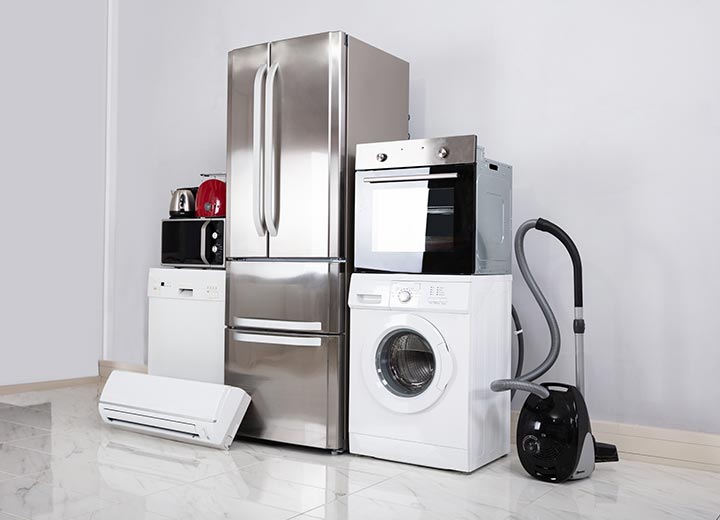
The trend of development in European and American household appliance molds includes the emergence of a series of new mold materials such as carbon tool steel, low alloy tool steel, and high alloy tool steel, and an increasing level of alloying in mold standard steel. For example, in the United States, 15 types of hot work mold steel have alloy elements greater than 5%, with 10 types having alloy elements greater than 10% accounting for 80% usage.
(1) High quenching penetration ultra-large forging and pressing mold steel, such as 40NiCrMoV7 in the International Standard ISO and 40NCD16 in the French NF standard;
(2) High heat strength household appliance mold steel, such as H10A in the United States and 5Mn15Ni5Cr8Mo2V2 steel from the Special Steel Company;
(3) High temperature hot work mold steel, such as T2M and T2C in the United States.
(1) High toughness, high wear-resistant mold steel, such as Vasco Die (8Cr8Mo2Vsi) steel from the United States vanadium alloy steel company;
(2) Low alloy air quenching micro-deformation steel, such as ASTM standard steel A14 and A16 in the United States;
(3) Powder metallurgy cold work mold steel, such as CPM10V from the United States, and 320CrVMo13.5 from Germany.
(1) Plastic mold steel with good machinability and polishability, such as 412 and M-300 from the United States, YAG from Japan, EAB from the United Kingdom, and STAVAX-13 from Sweden;
(2) Pre-hardened plastic mold steel, such as P20 and 445 from the United States, PDS from Japan, and MOVTREX-A (2312) from Germany;
(3) Whole quenching type plastic mold steel, such as A2, D3, and H13 from the United States;
(4) Corrosion-resistant plastic mold steel, such as 110Cr-Mo17 in the ISO standards and 4Cr13 from the Swedish ASSAB company.
Available coatings include TiC, TiN, TiCN, TiAlN, CrN, Cr7C3, W2C, etc. At the same time, heat treatment methods are moving from atmospheric heat treatment to vacuum heat treatment. Currently, laser strengthening, glow ion nitriding, and electroplating (brush plating) anti-corrosion strengthening technologies are increasingly being valued.
In order to strengthen their competitiveness, production of mold steel is moving from a dispersed structure to a centralized one, with many companies engaging in cross-border mergers. In order to better compete, these companies have built comprehensive and technologically advanced mold steel production lines and scientific research bases, forming several world-renowned mold production and research centers to meet the rapidly developing household appliance mold industry.

 Call us on:
  Email Us:
  Shengan Building A, Hengzeng Road Chang'an Town Dongguan City,