 EN
EN
Shengan Building A, Hengzeng Road Chang'an Town Dongguan City,
Guangdong, China, Zip Code: 523880

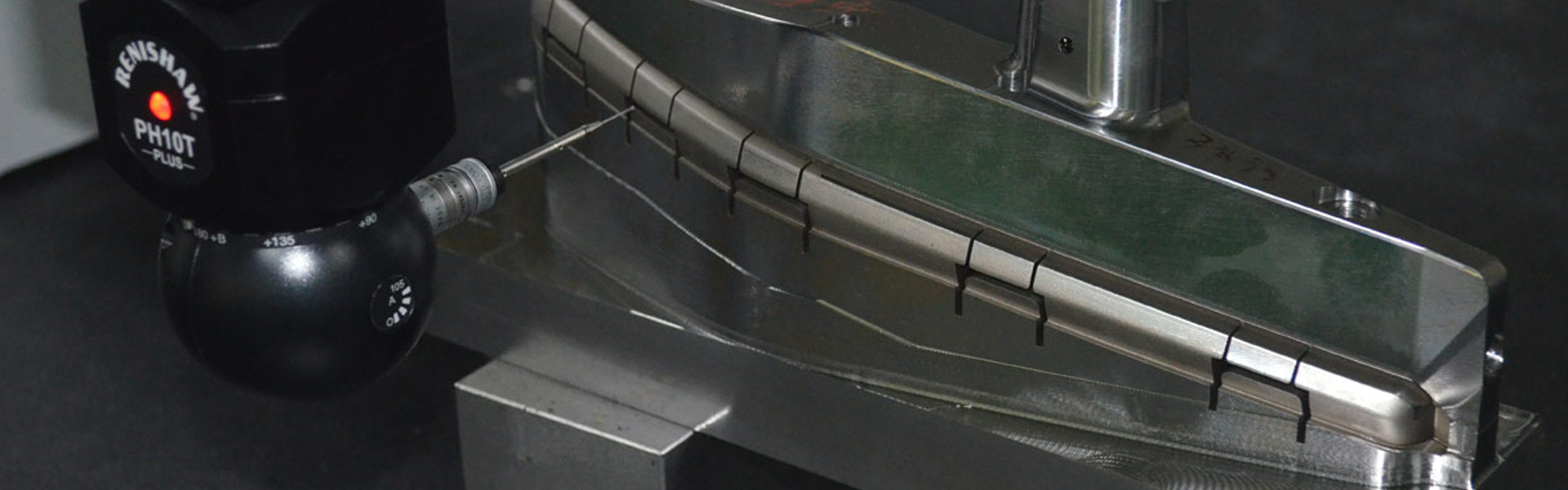
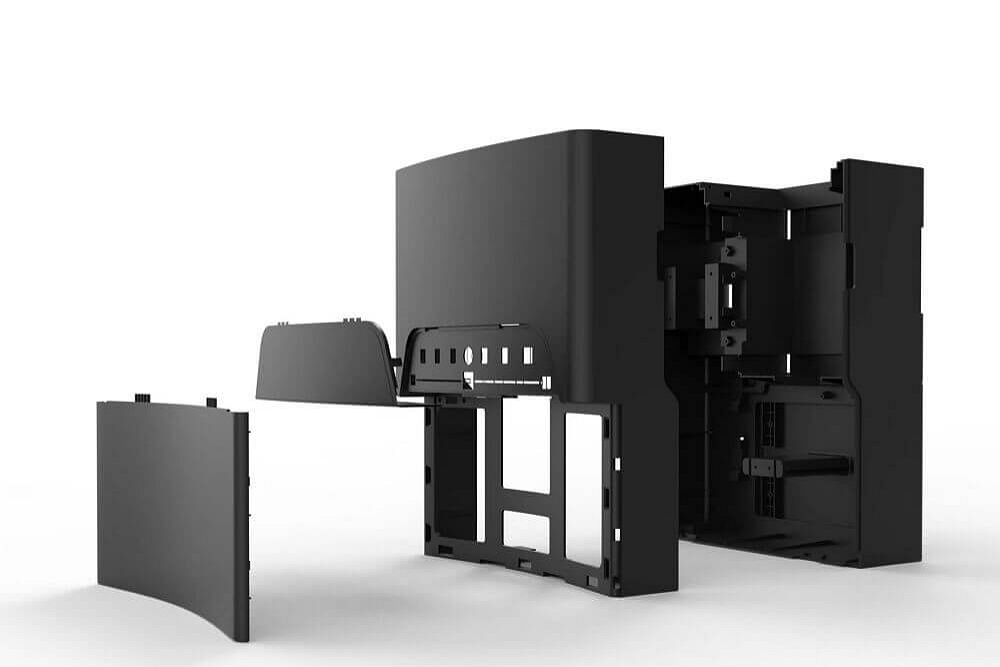
With the gradual increase in size of household appliances, the development of "one mold, multiple cavities" to improve production efficiency has also led to the increasing size of household appliance molds. At the same time, the rapid development of household appliance electronics has also led to the miniaturization and precision of parts, with some molds requiring machining precision tolerances of below 1μm.
Therefore, actively adopting advanced equipment and improving mold manufacturing levels is necessary to achieve significant economic benefits.
High-speed cutting is generally used for the surface molding of large household appliance covers, with machining accuracy reaching up to 0.01mm. The model surface produced by high-speed milling requires only a slight polish and can be used, saving a lot of time in grinding and polishing. High-speed cutting greatly shortens the mold production cycle, thereby improving the product's market competitiveness.
European and American mold companies mostly use CNC high-speed milling, with five-axis linkage and spindle speeds ranging from 15,000-30,000 rpm. In addition, European and American mold companies attach great importance to equipment updates, and the depreciation period for equipment is generally 4-5 years. Increasing the number of CNC high-speed milling machines is one of the key investments for household appliance mould companies.
High-speed scanning machines and mold scanning systems provide many functions for scanning from models or physical objects to producing the expected model, greatly shortening the development and manufacturing cycle of molds.
Some quick-scanning systems can be quickly installed on existing CNC milling center-type processing centers to achieve fast data collection and generate various CNC system processing programs and different CAD data formats for reverse engineering of household appliance molds manufacturing.
Mold scanning systems have been successfully applied in the European and American household appliance industries.
More than 80% of plastic molds produced by many foreign plastic mold factories use hot runner technology, which has very obvious effects.
Many European and American companies have successfully used gas-assisted technology in the molds of television housings, washing machine housings, and some thick-walled plastic parts. Gas-assisted injection molding has the advantages of low injection pressure, small product warpage deformation, good surface quality, and ease of forming products with large differences in wall thickness, greatly reducing costs while ensuring product quality.
With the increasingly fierce competition in the household appliance market, product updates are accelerating. Rapid prototyping technology and rapid mold making technology have been combined for mold manufacturing, using rapid prototyping technology to manufacture product parts prototypes, and then rapidly manufacturing molds based on the prototype. RP and RT technology can produce molds from mold design to manufacturing completion with only 1/3 to 1/4 of traditional processing methods and costs.
Many European and American household appliance mold manufacturers use rapid prototyping to cast silicone rubber molds, which are suitable for small-scale molding of plastic parts and product testing. Some countries in Europe also use aluminum to manufacture injection molds, which can shorten the injection molding cycle by 25% - 30%, greatly reduce the weight of the mold, and shorten the grinding and polishing time by half. Germany has developed a strengthened plastic material used for manufacturing mold cavities and cores, with a lifespan of more than 100,000 pieces.
Rapid prototyping technology and rapid mold making technology occupy a prominent position in the European mold exhibition, with various types of rapid prototyping equipment such as SLA, SLS, FDM, and LOM, as well as agencies and companies that specialize in providing prototype manufacturing services.

 Call us on:
  Email Us:
  Shengan Building A, Hengzeng Road Chang'an Town Dongguan City,